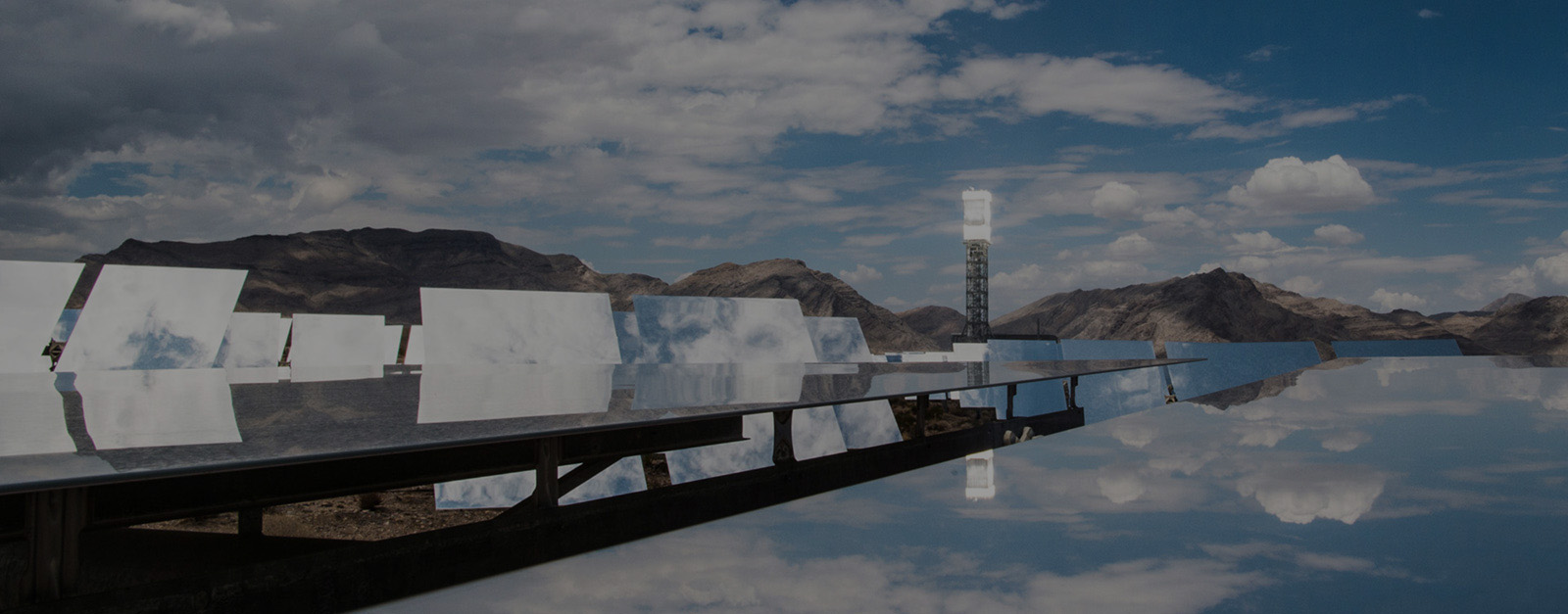
Heliostats reflecting a bright future for concentrating solar thermal.
News
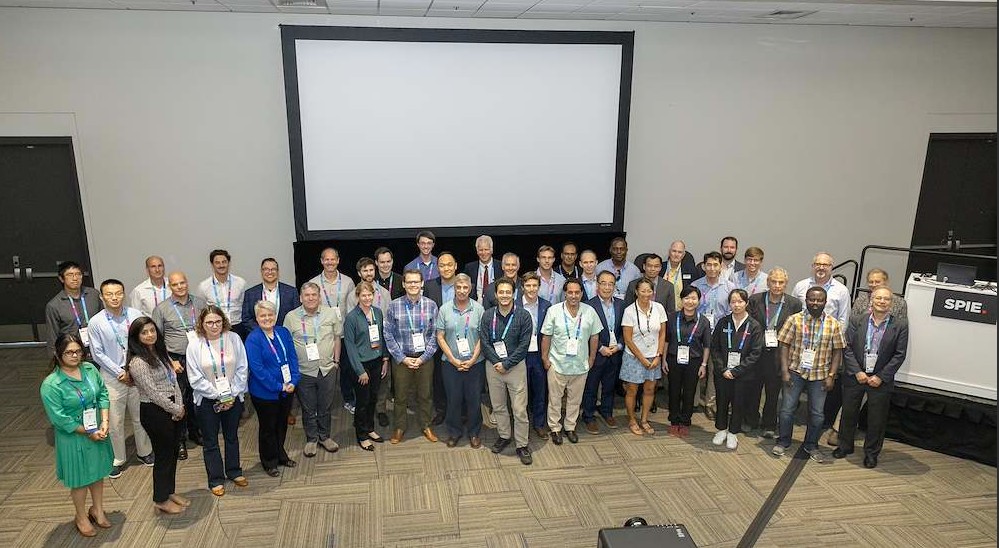
2026 HelioCon Workshop at SPIE
HelioCon hosted technical talks August 25-26 and the workshop on August 27, with a poster session. 2027 plans for HelioCon were shared. An industry panel shared their thoughts on the success of HelioCon, where to allocate funds, demonstration plant plus red flags, and standardization to getting to market.
Publication Highlight
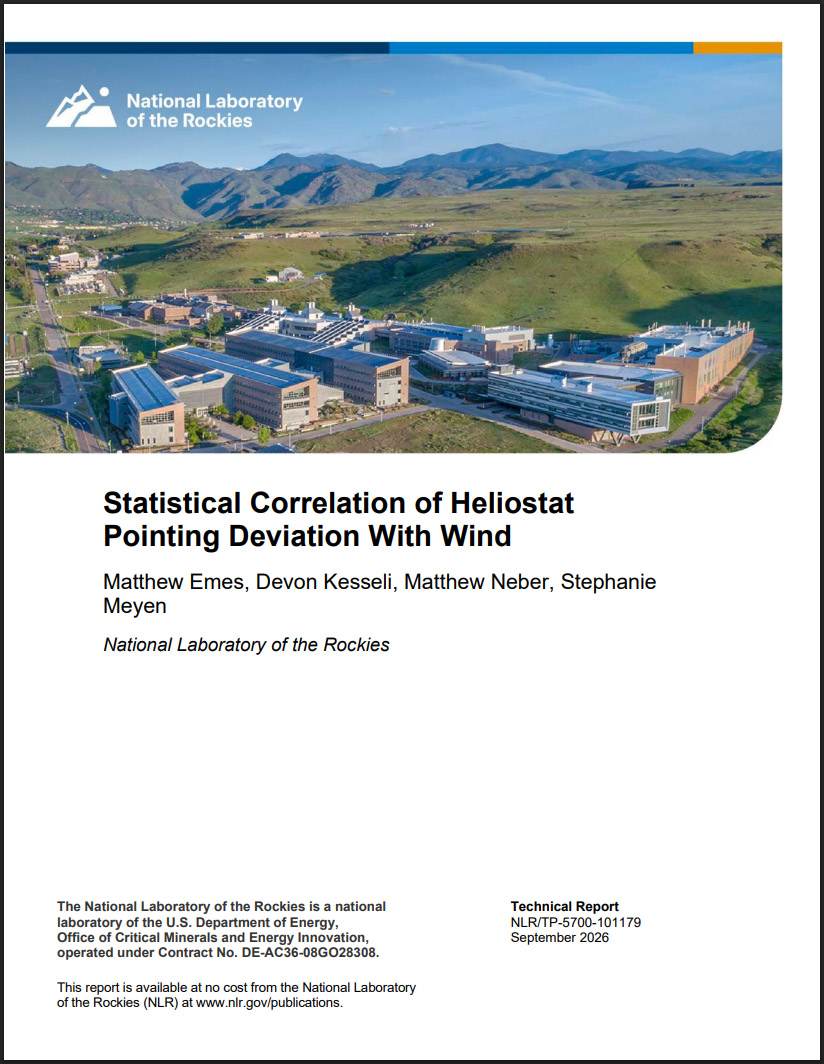
Statistical Correlation of Heliostat Pointing Deviation With Wind
This work was carried out as part of the Heliostat Consortium (HelioCon) Field Deployment subtask with the aim to develop a reduced order model framework for correlating wind speed and pointing deviation of a heliostat facet.
Read about the Statistical Correlation of Heliostat Pointing Deviation With Wind Project here.
The Heliostat Consortium (HelioCon) supports research, development, validation, commercialization, and deployment of low-cost and high-performance heliostats.
- Metrology and Standards
- Components and Controls
- Advanced Manufacturing
- Field Deployment
- Techno-economic Analysis
- Resources, Training, and Education
HelioCon Image Gallery
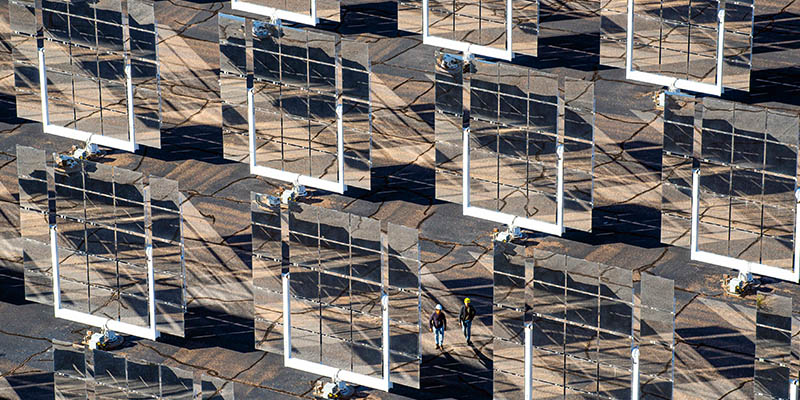
The National Solar Thermal Test Facility at Sandia National Laboratories.
Photo credit: Sandia National Laboratories
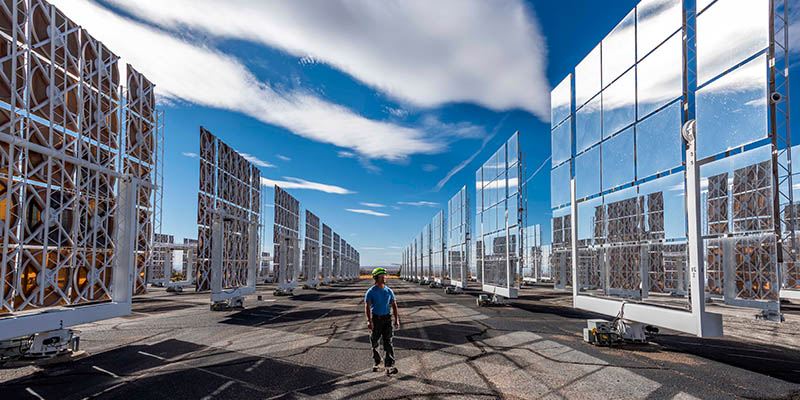
The National Solar Thermal Test Facility at Sandia National Laboratories.
Photo credit: Sandia National Laboratories
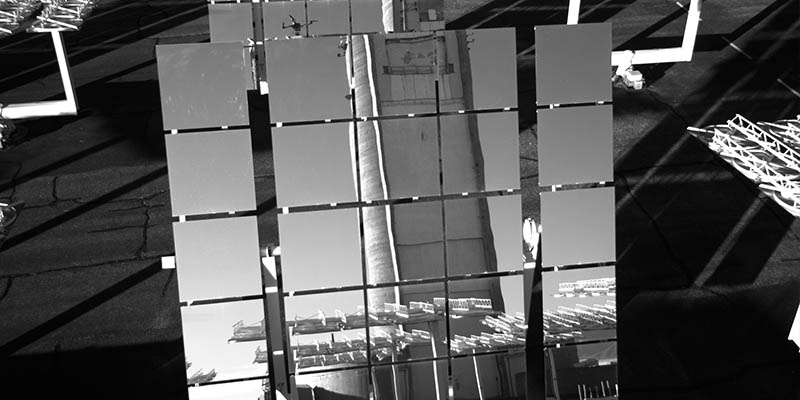
The National Solar Thermal Test Facility at Sandia National Laboratories.
Photo credit: Sandia National Laboratories
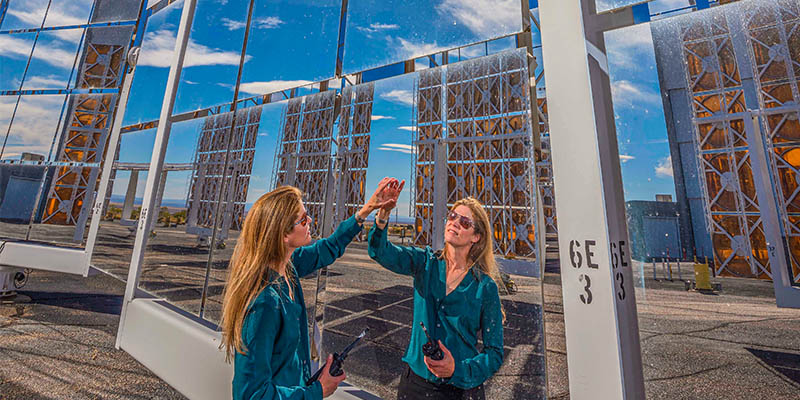
Dr. Margaret Gordon inspects heliostats at the National Solar Thermal Test Facility.
Photo credit: Sandia National Laboratories
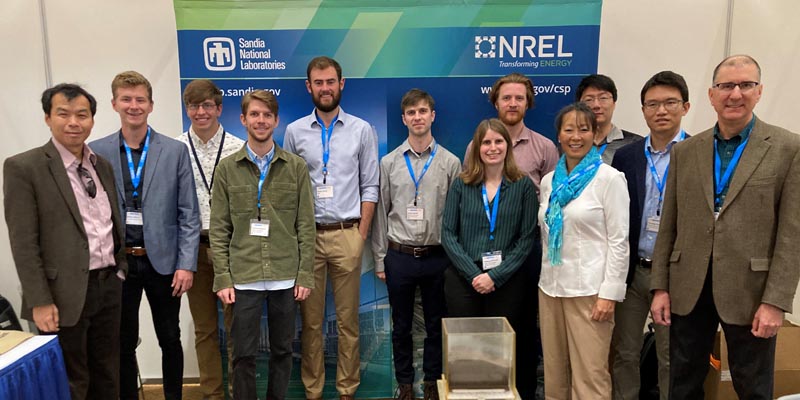
The NREL team gave presentations at the 2022 SolarPACES conference in Albuquerque, N.M.
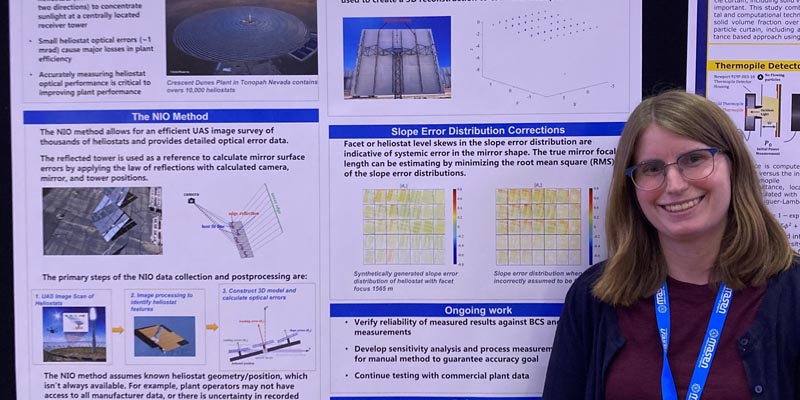
Dr. Rebecca Mitchell next to her presenation at the 2022 SolarPACES conference in Albuquerque, N.M. Photo credit: NREL
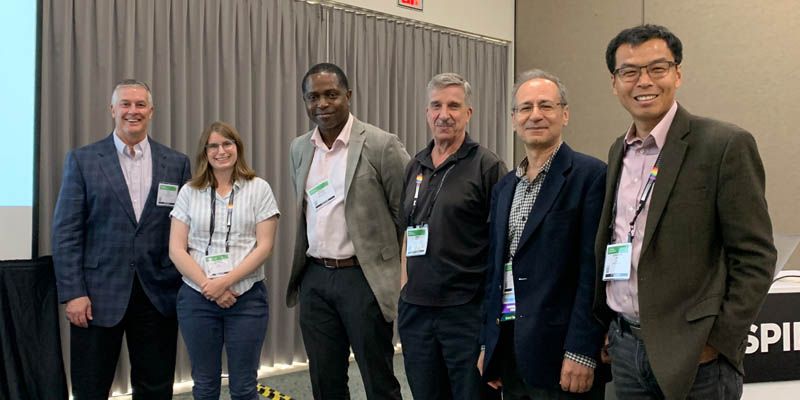
HelioCon at Workshop on Solar Energy, Aug 24, 2022 in San Diego, CA
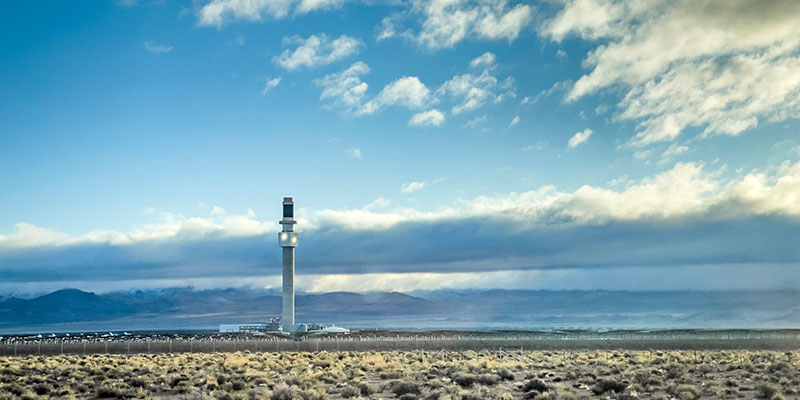
Crescent Dunes plant waking up in the morning
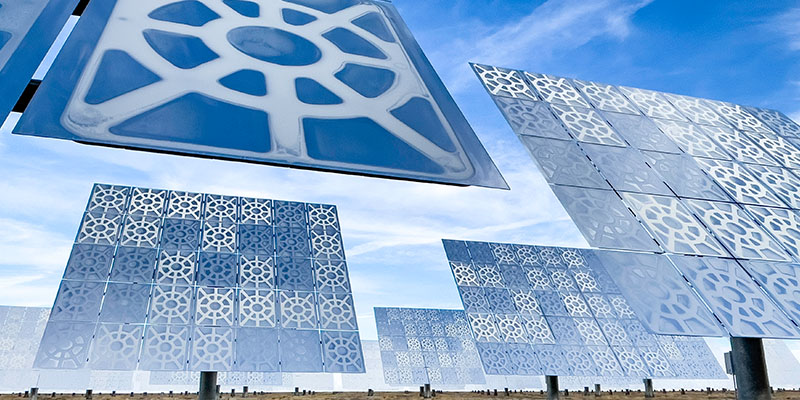
Crescent Dunes heliostats defrosting in the morning sun
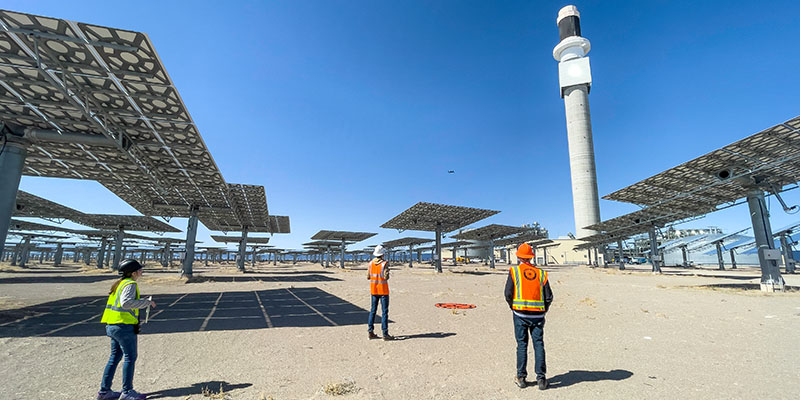
The NREL drone team collecting data at Crescent Dunes plants
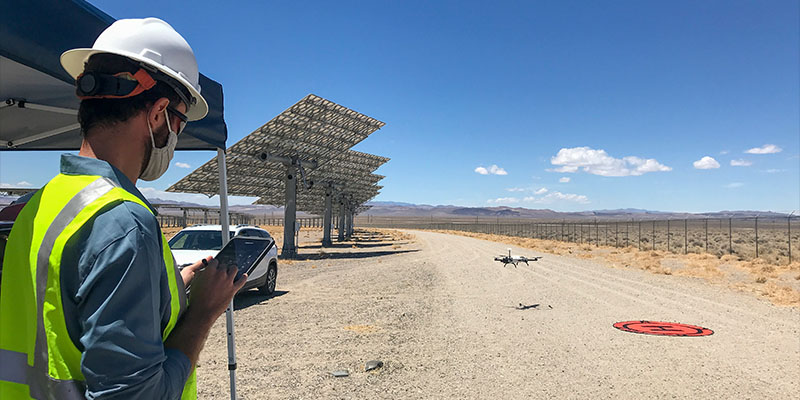
Tucker Farrell getting ready to launch the drone to take pictures of far-field heliostats at Crescent Dunes plant
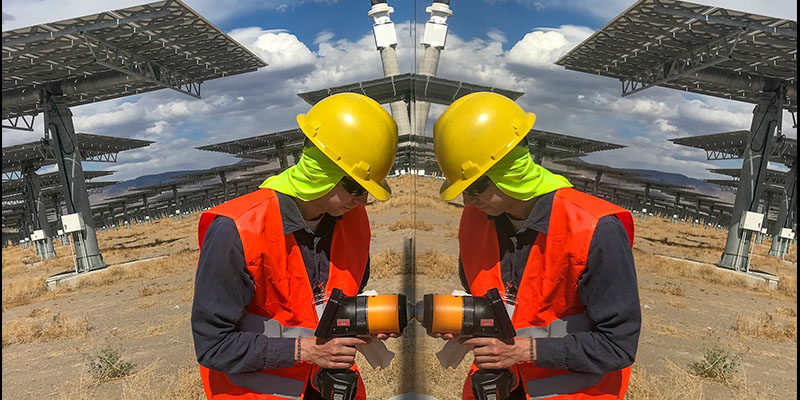
Devon Kesseli measuring the reflectance of a Crescent Dunes heliostat
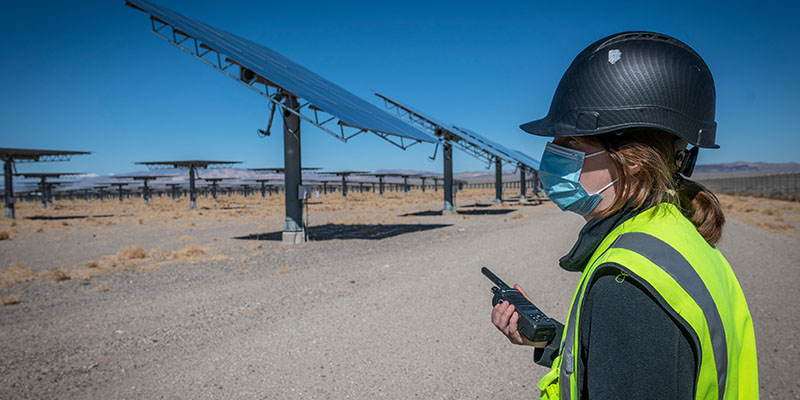
Rebecca Mitchell radioing into the control room at Crescent Dunes plant
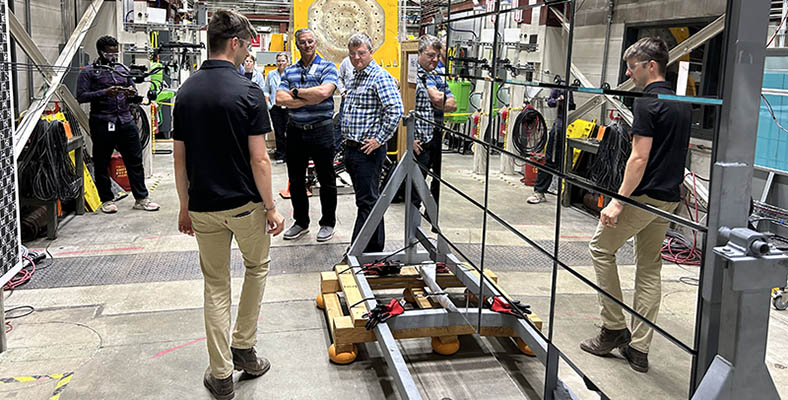
NREL’s Concentrating Solar-Thermal Power (CSP) team recently hosted a group from the U.S. Department of Energy (DOE) Solar Energy Technologies Office (SETO) team for a tour of facilities at the NREL Flatirons campus in August 2023.
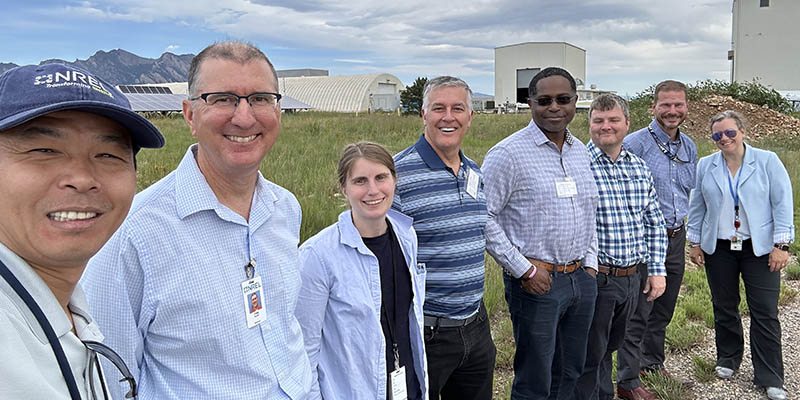
NREL’s Concentrating Solar-Thermal Power (CSP) team recently hosted a group from the U.S. Department of Energy (DOE) Solar Energy Technologies Office (SETO) team for a tour of facilities at the NREL Flatirons campus in August 2023.
Job Postings

HelioCon
Seminar Series
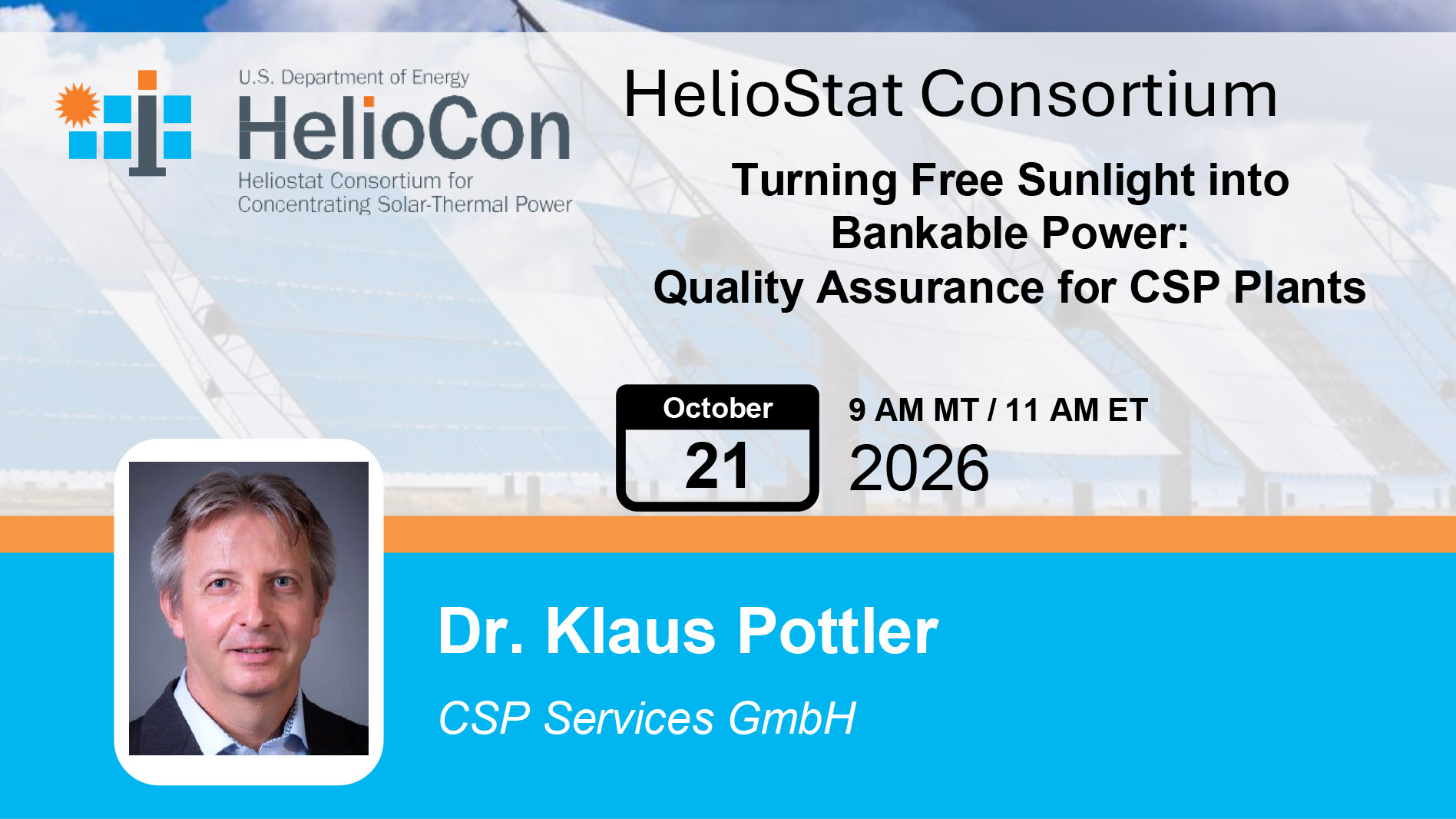
- Turning Free Sunlight into Bankable Power: Quality Assurance for CSP Plants
- October 21, 2026 9 a.m. MST
- Click here to register
- Click for past HelioCon Seminars
Join the HelioCon email list
Fill out the form below and we'll add you to our email list.